Official product information
How to Choose a Memory Supplement: Six Label Tests, Red Flags and a Phytomem Score
Quick answer
Pick a memory supplement with a full panel of amounts, doses near those used in studies, no disease claims, visible third-party testing, a named seller with a refund desk, and printed warnings. Walk away from promises to cure Alzheimer's or brain-scan pictures. Phytomem passes the seller test, gets partial credit on claims, and fails the rest on published facts.
Checklist
What should a good memory supplement label show?
A trustworthy memory supplement lets you check what is inside, how much, who sells it and who should avoid it. The six tests below take about five minutes with the bottle or the product page in front of you.
A full panel with amounts
The Supplement Facts panel should list every ingredient with its amount per serving, in mg, mcg or IU. A "proprietary blend" with one total weight hides how much of each part you get.
Doses near studied amounts
Compare each amount with the dose used in human studies. An ingredient present at a tiny share of the studied dose is mostly there for the label.
No disease claims
A supplement may say it "supports memory". It may not say it treats, cures, prevents or reverses dementia or Alzheimer's disease.
Third-party testing you can see
Look for a named outside lab or a testing seal from an independent group, plus a lot number you can ask about.
A named seller and a refund desk
The seller's name, a street address, a phone number and written refund terms should all be easy to find before you pay.
Interaction warnings printed
The label should say who should not take it, such as people who are pregnant or on certain medicines, and advise asking a doctor.
A product can pass some tests and fail others. The score table further down shows how Phytomem does on each one.
Doses
Why do ingredient amounts matter so much?
Research on an ingredient only tells you something when the product gives a similar amount. Without numbers on the label, a list of well-studied names says very little about what you are swallowing.
30 mg a day
The amount used in small Alzheimer's trials, where reviewers rated the evidence as low certainty (Ayati et al., 2020).
0.9 to 2.4 g a day
The most common range in blood sugar trials (Chen et al., 2022). No human memory trials were found (ADDF Cognitive Vitality, berberine).
500 to 1,000 mg a day
Extract amounts pooled in blood pressure trials, with low certainty (Ismail et al., 2021). Memory was not the question.
A small tablet also has limited room. When several ingredients have studied doses in the hundreds of milligrams or more, it is worth asking how one tablet could hold them all.
Red flags
Which red flags mean you should walk away?
Some sales tactics show up again and again in products that federal agencies have acted against. The FDA has sent warning letters about more than 58 products that claimed to prevent, treat or cure Alzheimer's disease (FDA, unproven Alzheimer's products).
Claims to cure or reverse Alzheimer's
The FDA warns that such products can delay real care and may interact with medicines (FDA, false Alzheimer's cure promises). The FTC and FDA sent joint warning letters to sellers making these claims in 2019 (FTC and FDA, 2019 warning letters).
"Miracle" or "breakthrough" language
The FTC says a product that suggests it can treat or cure a disease is probably a fraud, and advises asking a health professional before popping that pill (FTC, ask before popping that pill).
Before and after brain scans
Colored brain images labeled "without" and "with" a product look scientific. Unless a named, published study is linked, they are artwork, not evidence.
Made-up diseases
Sales pages sometimes present a research idea as a diagnosis. "Type 3 diabetes" is a proposed research term (de la Monte and Wands, 2008), not a category in the official diabetes classification (ADA, diabetes classification 2025).
Testimonials you cannot check
Glowing quotes with first names and stock-style photos prove nothing. Real reviews can be traced to real buyers.
Pressure to decide now
Countdown timers and "last chance" banners push you past your questions. A fair offer will still be fair tomorrow.
Phytomem score
How does Phytomem score on the checklist?
Phytomem passes one test clearly, gets partial credit on one, and cannot pass the other four on what has been published. We score it the same way we would score any other product, including where that means a low mark.
| Checklist test | What Phytomem shows | Result |
|---|---|---|
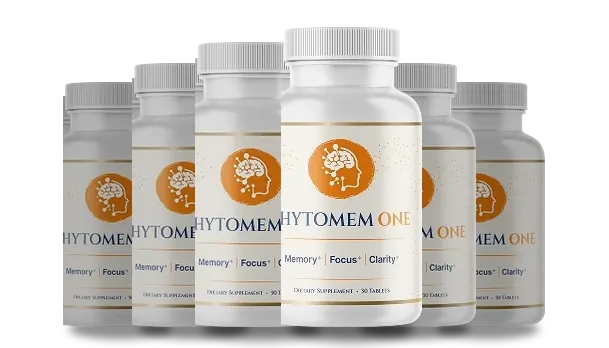
| Full panel with amounts | Front label only: PHYTOMEM ONE, Memory* | Focus* | Clarity*, 30 Tablets. Amounts Not published | Fails |
| Doses near studied amounts | Cannot be checked, since no amount is published for any ingredient | Fails |
| No disease claims | The label uses structure-function claims with the FDA statement, but the brand's info page leans on "Type 3 Diabetes" and "Plastic Stranglehold" ideas | Partial |
| Third-party testing you can see | No public lab report. Lot PHY-26/GO-5523 and certificate PHY-5523-26-GO are reference labels, and the seals are the brand's own | Fails |
| Named seller and refund desk | Gophytomem is named, with an office address, a phone desk at +1 (302) 200-3480, a returns address and 60 days to ask for a refund | Passes |
| Interaction warnings printed | Label cautions Not published. This site lists them from the ingredient research instead | Fails |

Two more things we noticed
The brand's art includes a "Doctor Formulated" seal, but no doctor is named anywhere. It also includes a pair of colored brain images labeled without and with the product, and no study stands behind them.
Both fit the red flags above. We list them so you can weigh them yourself, not to tell you what to decide.
The full label picture is on the Phytomem Supplement Facts page.
Raise score
What would raise the score?
Most of the missing points are about published facts, not about the ingredients themselves. If the brand released the items below, Phytomem could be judged on the same footing as products with open labels.
| Missing item | Checklist test it affects | Why it matters to you |
|---|---|---|
| A Supplement Facts panel with amounts | Full panel; doses | You could compare each ingredient with studied doses |
| A clear final ingredient list | Full panel | Six names in one place and ten in another leave the true list unknown |
| A public lab report for a named lot | Third-party testing | You could see purity and strength tests for the bottle you hold |
| Printed cautions on the label | Interaction warnings | Readers on medicine would see the berberine note without searching |
Before you buy
What should you do before buying any memory supplement?
Talk to a doctor or pharmacist first, with the label in hand. The FTC gives the same advice (FTC, ask before popping that pill), and it matters most for anyone who already takes daily medicine.
- Bring your full medicine list. Berberine, one of the ingredients named for Phytomem, can slow the liver enzymes that clear many common drugs (Guo et al., 2012).
- Mention diabetes medicine in particular. Berberine may lower blood sugar and can interact with diabetes drugs (NCCIH, diabetes and dietary supplements).
- Check the refund terms and put the last refund day in your calendar before the box arrives.
- Buy from the named seller, not from an unknown listing, so the refund desk will recognize your order.
For a general look at memory, warning signs and daily habits, read our memory and focus guide. The Phytomem side effects page lists every caution we found.
FAQ
Buying checklist FAQ
What is the single most useful thing on a supplement label?
The Supplement Facts panel with an amount for each ingredient. Without it, you cannot compare the product with any study.
Is a product with an FDA statement approved by the FDA?
No. The statement says the claims were not evaluated. The FDA does not approve dietary supplements before they are sold (FDA, dietary supplement Q&A).
Does Phytomem pass the checklist?
It passes the seller and refund test and gets partial credit on disease claims. It fails the panel, dose, testing and printed-warning tests on what has been published.
Are before and after brain images proof?
Not unless a named, published study stands behind them. Otherwise they are marketing art.