Phytomem Blog
Phytomem Ingredients: Six Names, Ten on the Info Page, vs the Research
Quick answer
Phytomem ingredients are saffron extract, olive leaf oleuropein, berberine HCl, Ceylon cinnamon, fucoidan and fucoxanthin, the six named on the label graphic. The brand's info page adds four more: corosolic acid, kudzu flower, Morosil and xylitol. No amount is published for any of them. Studies used 30 mg of saffron extract a day for memory and 900 to 2,400 mg of berberine for blood sugar, so no dose can be checked.
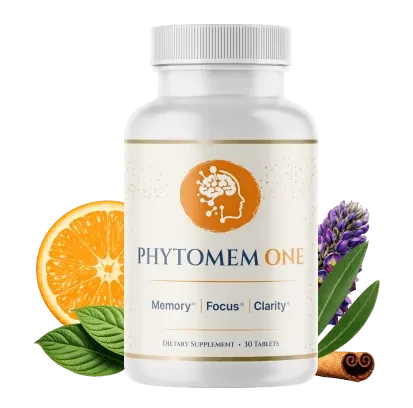
Phytomem gives two answers to a simple question: what is in the tablet? One list has six names, the other ten, and neither shows a single amount. This post puts each name next to the dose researchers actually tested.
The label
What are the two Phytomem ingredient lists?
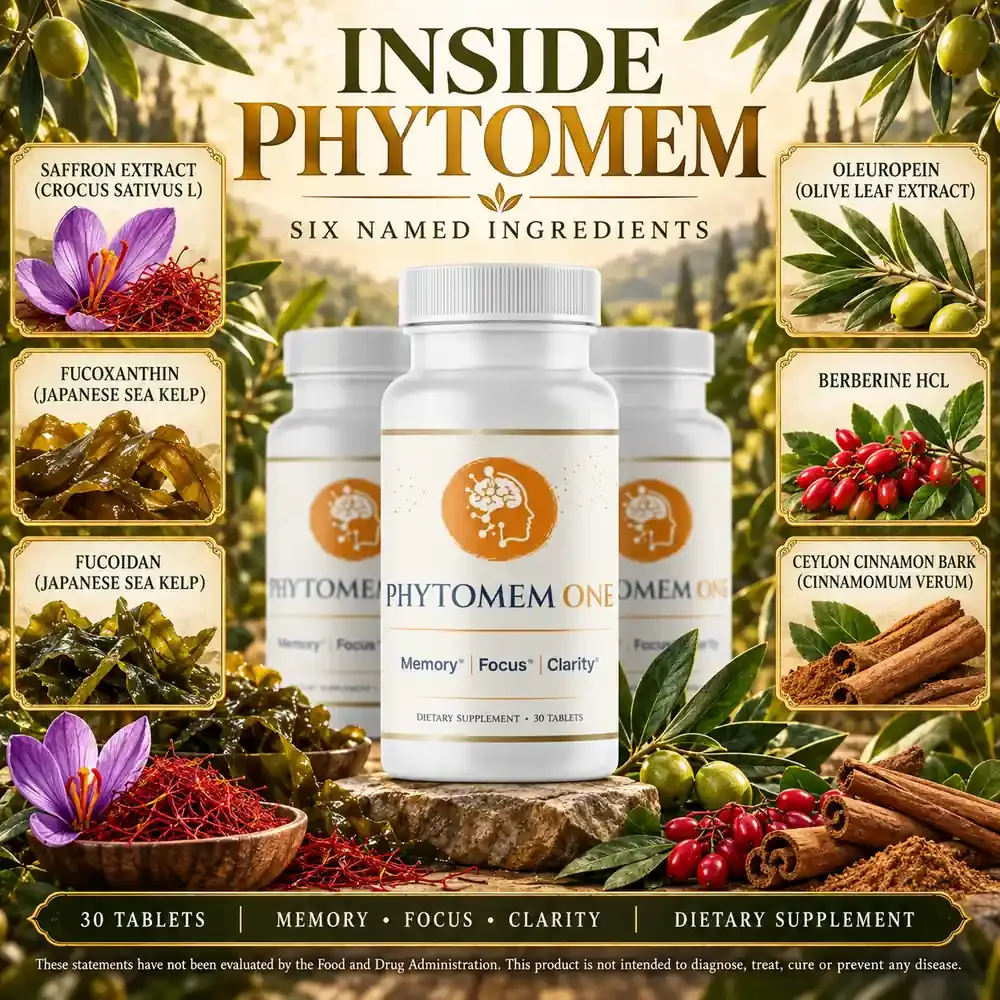
The seller pack and the brand's own graphic name six ingredients. The brand's info page names those six plus four more and calls the result a "10-in-1" formula.
List one: six names
Saffron extract, fucoxanthin, fucoidan, oleuropein from olive leaf, berberine HCl and Ceylon cinnamon bark. These appear on the seller pack and on the graphic at left.
List two: four more
Corosolic acid from banaba leaf, kudzu flower extract, Morosil (a Sicilian red orange extract) and xylitol, a sugar alcohol often used as a sweetener. These appear only on the info page.
No Supplement Facts panel was supplied, so nobody outside the company can say which list matches the tablet in your hand.
What the bottle itself says, line by line, is on the Phytomem Supplement Facts page.
The gap
Why do missing ingredient amounts matter?
A study result only holds at the dose that was tested. When a label hides its amounts, you cannot tell whether a tablet holds a studied dose, a small fraction of one, or more than you want.
One tablet has limited room
Berberine was tested at 900 to 2,400 mg a day in most blood sugar trials. Even the low end is close to a full gram, and Phytomem has to fit five or nine other ingredients beside it. The tablet weight is not published either.
Some ingredients work at tiny doses
Saffron extract was tested at 30 mg a day and fucoxanthin at 1 to 3 mg. A tablet could easily hold those amounts. Without a panel, you still cannot tell whether it does.
Memory studies
Which Phytomem ingredients were studied for memory, and at what dose?
Three of the named ingredients have at least one human memory study: saffron, fucoxanthin and olive leaf. None of those studies is strong, and none tested this tablet.
Saffron extract: 30 mg a day
A 2020 review pooled four small trials with 203 people who had mild cognitive impairment or Alzheimer's disease (Ayati et al., 2020). The Alzheimer's trials used 30 mg of saffron extract a day. Saffron beat placebo on some memory and thinking scores, but the authors rated the evidence as low and did not recommend it for clinical use.
Fucoxanthin: 8.8 mg a day, from microalgae
One 12-week trial gave 43 older adults who felt their memory slipping 8.8 mg of fucoxanthin a day (Yoo et al., 2024). Some memory and reaction tests improved, but many changes were over time rather than clearly against placebo. The fucoxanthin came from microalgae, not the Japanese sea kelp Phytomem names, and two authors work for the extract's maker.
Olive leaf: a tea, not a tablet
A small study in people with mild Alzheimer's used a daily drink made from 21 g of dried olive leaves (Loukou et al., 2024). It had no placebo group, only 23 people finished, and most scores did not differ.
We go deeper into the saffron trials, and how they compare with cooking, in saffron and memory explained.
Blood sugar and more
What were the other named ingredients studied for?
The rest of the six were studied for blood sugar, blood pressure or other health markers, not memory. For two of them there is no human memory data at all.
Berberine HCl: 900 to 2,400 mg a day
A 2022 review of 37 trials in 3,048 people with type 2 diabetes found berberine lowered fasting blood sugar and HbA1c (Chen et al., 2022). Most trials used 0.9 to 2.4 g a day for about three months. A research group focused on dementia found no study of berberine and human thinking (ADDF Cognitive Vitality, berberine), though that page dates from 2017.
Oleuropein from olive leaf: 51 mg, or 500 to 1,000 mg of extract
In 45 overweight men, 51 mg of oleuropein a day for 12 weeks improved insulin sensitivity by about 15 percent (de Bock et al., 2013). A review of five trials found 500 or 1,000 mg of extract may modestly lower systolic blood pressure, with low certainty (Ismail et al., 2021).
Fucoidan and Ceylon cinnamon: no memory dose
Fucoidan has only a few small human studies, at 1 to 4 g a day, on things like vaccine response and fatigue (Fitton et al., 2015). There is no direct human evidence linking it to dementia (ADDF Cognitive Vitality, fucoidan). Ceylon cinnamon has only trace coumarin, and a US health agency says it is unclear whether cinnamon supplements help diabetes (NCCIH, cinnamon). No study gives a memory dose for either one.
Want to judge Phytomem yourself? Every pack comes with a 60-day money-back window.
Prices from $49 a bottle. Free US shipping on 3 and 6 bottles.
Info page extras
What about the four extra names on the info page?
All four were studied for weight, blood sugar or gut comfort, and none for memory.

Corosolic acid from banaba: 16 to 48 mg of extract
One study gave 10 people with type 2 diabetes 16 to 48 mg of banaba extract a day, with no placebo group (Judy et al., 2003). A single case report describes kidney injury in a person with diabetes and weak kidneys after taking corosolic acid (Zheng et al., 2010).
Kudzu flower and Morosil
Kudzu flower extract at 200 or 300 mg a day lowered belly fat in 81 adults with obesity (Kamiya et al., 2012). Morosil at 400 mg a day helped weight loss over six months in a study paid for by its maker (Briskey et al., 2022).
Xylitol
Xylitol is a sweetener. Large single drinks of 35 to 50 g upset the gut (Storey et al., 2007), far more than a tablet could hold. It is toxic to dogs, though, so keep the bottle out of a pet's reach (FDA, xylitol and dogs).
Side by side
How do all ten Phytomem ingredients compare with the research?
The amount column reads the same all the way down. The dose column shows which number to ask for.
| Ingredient | Phytomem amount | Dose in human studies | Studied for |
|---|---|---|---|
| Saffron extract | Not published | 30 mg a day (Ayati et al., 2020) | Memory, in MCI and Alzheimer's (low certainty) |
| Fucoxanthin | Not published | 1 to 3 mg (Hitoe and Shimoda, 2017); 8.8 mg (Yoo et al., 2024) | Weight; one small memory trial |
| Fucoidan | Not published | 1 to 4 g, non-memory studies (Fitton et al., 2015) | No human memory data |
| Oleuropein (olive leaf) | Not published | 51 mg (de Bock et al., 2013); 500 to 1,000 mg extract (Ismail et al., 2021) | Insulin, blood pressure |
| Berberine HCl | Not published | 900 to 2,400 mg a day (Chen et al., 2022) | Blood sugar; no memory trials |
| Ceylon cinnamon bark | Not published | Varies; no memory dose (NCCIH, cinnamon) | Blood sugar (unclear) |
| Corosolic acid (banaba) | Not published | 16 to 48 mg extract (Judy et al., 2003) | Blood sugar, 10 people |
| Kudzu flower | Not published | 200 to 300 mg a day (Kamiya et al., 2012) | Belly fat |
| Morosil | Not published | 400 mg a day (Briskey et al., 2022) | Weight (maker-funded) |
| Xylitol | Not published | Sweetener; gut upset at 35 to 50 g (Storey et al., 2007) | Gut comfort |
Only saffron has a small body of memory trials, and the four extras were never tested for thinking at all.
Each name has its own entry on the Phytomem ingredients page.
Questions
What should you ask the brand before you buy?
Ask for the Supplement Facts panel first, because it answers most other questions at once. Then ask these.
The amount of each ingredient
Milligrams per tablet for every name, not a single blend total, so you can hold each one up against the table above.
Which list is right
Whether corosolic acid, kudzu, Morosil and xylitol are in the tablet, and if so, why the brand's own graphic leaves them out.
How strong each extract is
Extracts differ in strength from one maker to the next, so ask what each one is set to.
A lab report for your lot
A certificate from a named lab. Lot PHY-26/GO-5523 and PHY-5523-26-GO on this site are reference labels, not lab results.
Put these to the order desk at +1 (302) 200-3480 (hours not published) or write to [email protected].
Our take
So can you judge Phytomem from its ingredient list?
Not on dose. With no amounts, nobody can tell whether Phytomem comes close to any studied dose, and no study of the tablet itself exists.
What you can judge is the buying terms. The smallest pack is 2 bottles, and every order has a 60-day refund window from purchase. See the Phytomem pricing page for cost per day.
Read the memory supplement safety checklist for every caution in one place, and our guide to choosing a memory supplement to weigh other products.