Phytomem Blog
Saffron and Memory Explained: What the Trials Mean for Phytomem
Quick answer
Saffron is a spice made from the dried red threads of the crocus flower. In four small trials with 203 people who had mild cognitive impairment or Alzheimer's, 30 mg of saffron extract a day beat placebo on some memory scores, but the evidence is rated low. Phytomem does not publish its saffron amount, so it cannot promise the same result.

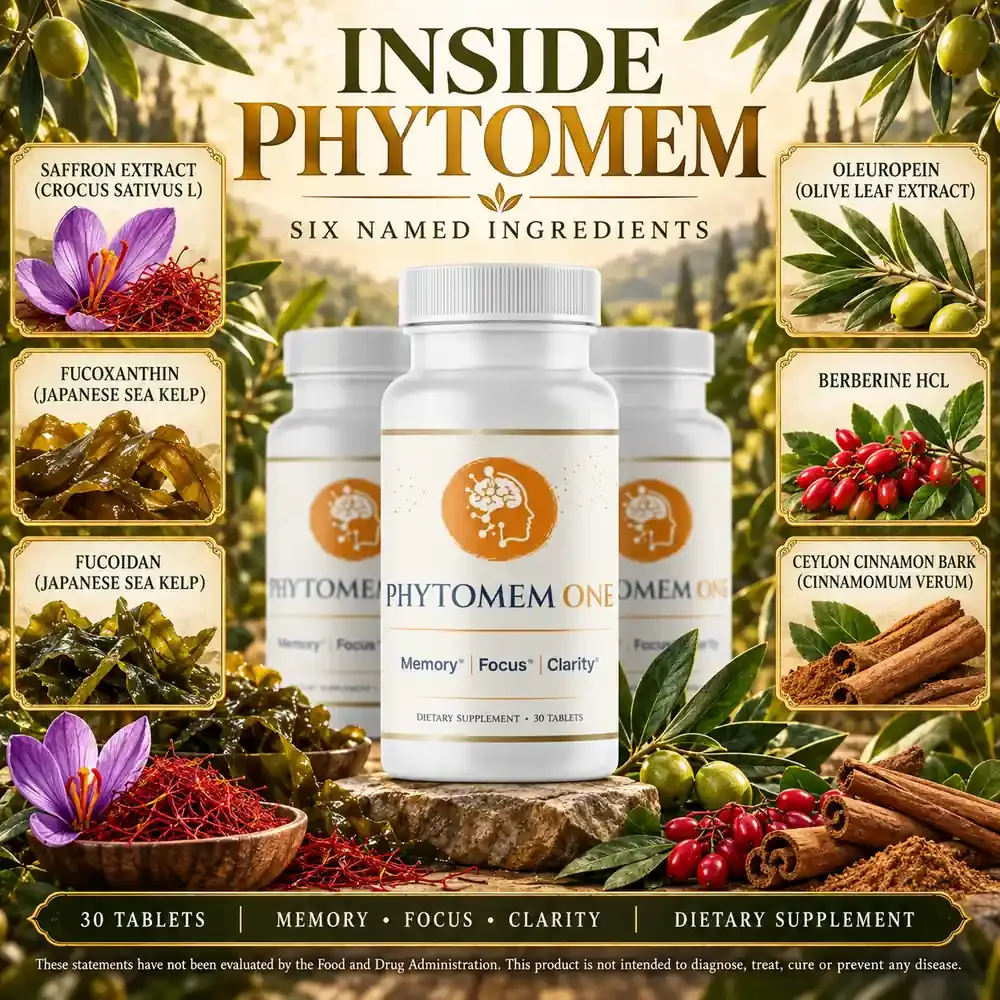
Saffron is the first name on the Phytomem graphic, and it is also the ingredient with the most memory research behind it. That research is small, though, and it was done in people with a diagnosis. Here is what it tested, what it found and what it can and cannot tell a healthy adult.
The spice
What is saffron?
Saffron is a spice made from the dried red threads of the crocus flower, Crocus sativus. Cooks use a few threads at a time to color rice and stews golden and to add flavor.
Threads, powder and extract
Threads are the whole dried spice. Powder is the same threads ground fine. An extract is made by pulling certain compounds out of the threads, so a few milligrams of extract are not the same as a few milligrams of kitchen saffron.
Phytomem names saffron extract. It does not say how the extract was made, how strong it is or how much of it sits in one tablet.
The dose
What did the saffron memory trials use?
Most of the trials used 30 mg of saffron extract a day. One trial used 125 mg of saffron powder a day instead (Ayati et al., 2020).
Four small trials, 203 people
The best summary we found is a 2020 review that pooled four randomized trials. Together they included 203 people, which is small for a question as big as memory.
People with a diagnosis, not healthy adults
Everyone in these trials had mild cognitive impairment or Alzheimer's disease. That matters. A result in people with a memory disorder does not tell us what saffron does for a healthy adult who wants to stay sharp, and it is not a reason to swap a prescribed treatment for a spice.
Compared with placebo, and with two drugs
Some trials set saffron against a dummy pill. Others set it against donepezil or memantine, two prescription medicines used in Alzheimer's care. That design tells you how saffron scored next to those drugs on the tests used, not that it can replace them.
The results
What did the saffron trials find?
Saffron beat placebo on some memory and thinking scores and scored about the same as donepezil or memantine (Ayati et al., 2020). The review authors still rated the evidence as low and said it is not enough to recommend saffron for clinical use.
What "low certainty" means
Low certainty means the true effect could turn out quite different once bigger and better trials are done. With so few people, a couple of unusual results can tip the average. It is a reason for interest, not a reason for confidence.
What a better score means
The results are scores on memory and thinking tests. A few points on a test is a real finding, but it does not tell you how much easier daily life felt, and none of these scores came from healthy adults.
What the trials did not show
- That saffron treats, slows or prevents dementia or Alzheimer's disease
- That saffron helps memory in healthy adults
- Anything about Phytomem, a tablet that mixes saffron with five or more other ingredients
Curious to try Phytomem with a safety net? Every pack has a 60-day refund window.
Prices from $49 a bottle. Free US shipping on 3 and 6 bottles.
Kitchen vs capsule
How does saffron in a supplement compare with saffron in food?
Food saffron is a flavor, while trial saffron was a measured daily dose of extract. The table puts cooking, the trials and Phytomem side by side on the points you can check.
| Point | Saffron in cooking | Saffron extract in trials | Saffron in Phytomem |
|---|---|---|---|
| Form | Dried threads or powder, cooked into food | Extract; powder in one trial | Extract, per the brand graphic |
| Daily amount | Small and varies by recipe | 30 mg extract; 125 mg powder (Ayati et al., 2020) | Not published |
| Who took it | Anyone eating the dish | People with MCI or Alzheimer's | Adults 18 and over, per the brand |
| Safety view | Food amounts are safe (MD Anderson, saffron) | Far below the grams linked to harm | Cannot be judged without an amount |
| Memory evidence | Not tested for memory | Low certainty | No study of the tablet |
A dish flavored with saffron is not a memory treatment, and no study has measured how kitchen saffron compares with a trial dose of extract. By the same logic, Phytomem cannot be matched to the trials until its amount is published. The Phytomem ingredients page tracks what has been published so far.
Safety
Is saffron safe to take as a supplement?
Saffron is safe in food amounts, and the trial doses sit far below the levels linked to harm. There are still a few clear limits.

Large doses are toxic
About 5 g of saffron is linked to toxic effects, and about 20 g is considered a lethal dose (Drugs.com, saffron monograph). That is far more than any trial used, but it is why stacking several saffron products is a poor idea.
Pregnancy
Amounts of 5 g or more can stimulate the uterus, and saffron supplements should be avoided in pregnancy (Drugs.com, saffron monograph).
Kidney or bleeding disorders, and medicines
A cancer center advises people with kidney or bleeding disorders to avoid high-dose saffron supplements, and notes that saffron may interact with some medicines, including some mental health drugs (MD Anderson, saffron).
The Phytomem directions are one tablet a day with food. Do not take more to chase a faster result.
Every caution for all ten Phytomem names is collected on the Phytomem side effects page.
Claims
Why can't a saffron supplement promise memory results?
Because no study backs a promise for a healthy adult, and because the law treats a promise to treat disease as a drug claim. A supplement label can only say it supports a normal body function.
Supplements are not approved before sale
The FDA does not approve dietary supplements before they are sold, and a product sold to treat, prevent or cure a disease is legally a drug (FDA, dietary supplement Q&A). That is why the Phytomem bottle says "Memory*", "Focus*" and "Clarity*", with the asterisk pointing to the FDA statement.
The wider evidence is thin
A US health agency review found that most supplements lack convincing evidence for preventing or slowing dementia (NCCIH, supplements and cognitive function). Saffron was not among the products it covered.
Saffron is one ingredient in a mix
Even at a trial dose, saffron in Phytomem sits beside five to nine other ingredients that were never tested together. No study of the tablet exists, so nobody knows how the full mix behaves.
The brand's timeline is the brand's word
The Phytomem info page FAQ says many users report changes in mental clarity, word recall and morning sharpness in a few weeks. That is the brand's statement, not a trial result. Results vary, and sleep, food, activity and hearing still matter.
Doctor visit
When should memory changes go to a doctor instead?
Forgetting which day it is and remembering later is a normal part of aging. Getting lost in familiar places or asking the same question again and again are signs to talk with a doctor (NIA, memory problems and aging).
Some causes of memory trouble can be treated once they are found. A supplement, saffron or otherwise, should never delay that visit.
Key points
What are the key points about saffron and memory?
Saffron has a small, promising and uncertain set of memory trials, all in people with a diagnosis. The rest follows from that.
- Trials used 30 mg of saffron extract a day; one used 125 mg of powder
- Four small trials, 203 people, all with MCI or Alzheimer's disease
- Results beat placebo on some scores, with low-certainty evidence
- Food amounts are safe; high doses and pregnancy are not
- Phytomem does not publish its saffron amount, so it cannot be matched to the trials
If saffron is the reason you are looking at Phytomem, ask the order desk at +1 (302) 200-3480 or [email protected] for the saffron amount per tablet and the type of extract before you buy.
See how saffron sits beside the other nine names in Phytomem vs the research, and weigh any product in this group with our guide to choosing a memory supplement. The safety checklist covers the other ingredients.